November 3, 2026
The hidden reason your front desk is losing bookings
It's 5:40pm at a gym. Three members are checking in. A walk-in wants a tour. The phone rings. Someone's asking about a frozen membership. A text comes in about a trial pass.
The front desk person can only do one thing at a time. The phone rings twice, then goes to voicemail. Nobody checks the text for another 40 minutes. By the time anyone calls back, the person has already booked a trial somewhere else.
This isn't a hiring problem or a training problem. It's a math problem. Your busiest hours for foot traffic are also your busiest hours for new leads calling in, and one person can't serve both at full attention.
Why this happens at every front desk
Most local businesses staff the front desk for the people already walking through the door. That makes sense. Current members and clients are the ones paying right now.
But new leads call during the exact same windows. Someone sees your gym on their drive home from work and calls right then, at 5:45pm, which is also when your desk is slammed with check-ins.
A studio owner I talked to pulled her call logs for one week. She had 34 inbound calls. Eleven went to voicemail. Of those eleven, four people left a message. The other seven just hung up and, based on her follow up calls, five of them had booked somewhere else by the next day.
That's not a small leak. That's close to 15% of her weekly call volume walking straight to a competitor because nobody picked up during a rush.
The lead doesn't wait for you to catch up
Here's the part that stings. The person calling about a facial or a first personal training session is usually comparing two or three places. They're not loyal yet. They have no relationship with you.
If your competitor picks up on the second ring and books them for Thursday, and you send them to voicemail, you've lost someone who was ready to spend money this week.
Response time research across service businesses shows the odds of connecting with a lead drop by more than half after just 10 minutes of silence. A voicemail that gets returned two hours later is often too late. The lead has already called the next place on their list.
Audit your own intake process
Before you fix anything, find out how bad the leak actually is. Spend one week watching this closely.
- Count every missed call, every unanswered text, and every walk-in who left without talking to someone during a rush. Write the time down.
- Check how long it takes, on average, for someone to call back a missed call. Not your policy. The actual time, based on your call log timestamps.
- Ask your front desk what they do when three things happen at once. If the honest answer is "the phone waits," you have your answer.
- Look at your busiest 90 minutes of the day. Cross reference that window against your missed call times. They'll likely overlap almost exactly.
- Pull your booking source data if you have any. How many new clients this month came from a call versus a text versus walking in. If calls are underrepresented compared to your ad spend or referral volume, some of those calls are getting dropped.
- Check your voicemail box. If it has messages older than a day sitting in it, that's leads going cold in real time.
Most owners who run this audit are surprised. They assumed the leak was small. It's usually bigger, and it's almost always concentrated in the same two or three hours every day.
What this actually costs
Do the math for your own business. Say you average 20 missed calls a week during peak hours, and a third of those would have converted into a trial or a consultation. That's about 7 people a week, or 28 a month, who had intent and didn't become customers because nobody answered in time.
If your average client is worth $80 a month and sticks around for 6 months, that's $13,440 a month in lifetime value walking out the door. Even if your real numbers are a quarter of that, it's still thousands of dollars a month tied to nothing more complicated than timing.
Fixing it without hiring another person
You don't need a second front desk hire for every shift. Most businesses can't justify that cost anyway. What actually works is making sure no inquiry, whether it's a call, text, or web form, sits unanswered long enough to go cold.
That means having a system where missed calls automatically trigger a text back within a minute or two, so the person knows you saw them reach out even if nobody could pick up live. It means every channel, texts, emails, calls, and new leads, lands in one place so nothing gets buried in three different inboxes.
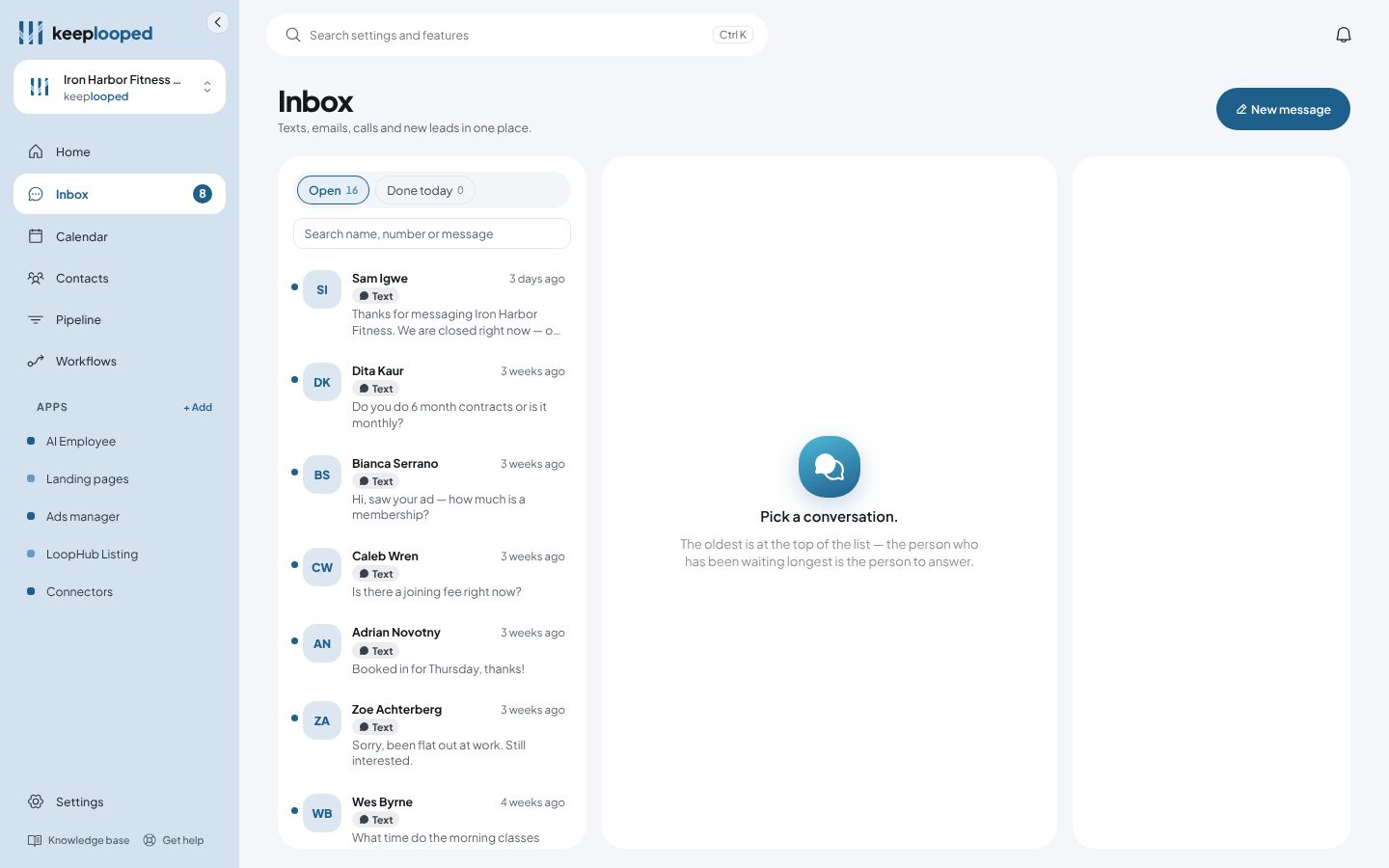
This is the gap Keeplooped is built to close. When the front desk is slammed, the system still sends an immediate reply, logs the inquiry, and keeps it visible until someone follows up. Nobody has to remember to call back a missed call from three hours ago because it's sitting right there with a timestamp.
You can also set up automatic follow up sequences so a missed call or an unanswered text doesn't just get one reply and then silence. If the lead doesn't respond to the first text, a second message goes out the next day. If they still don't answer, a third one a few days later. This catches people who were busy the first time but still interested.
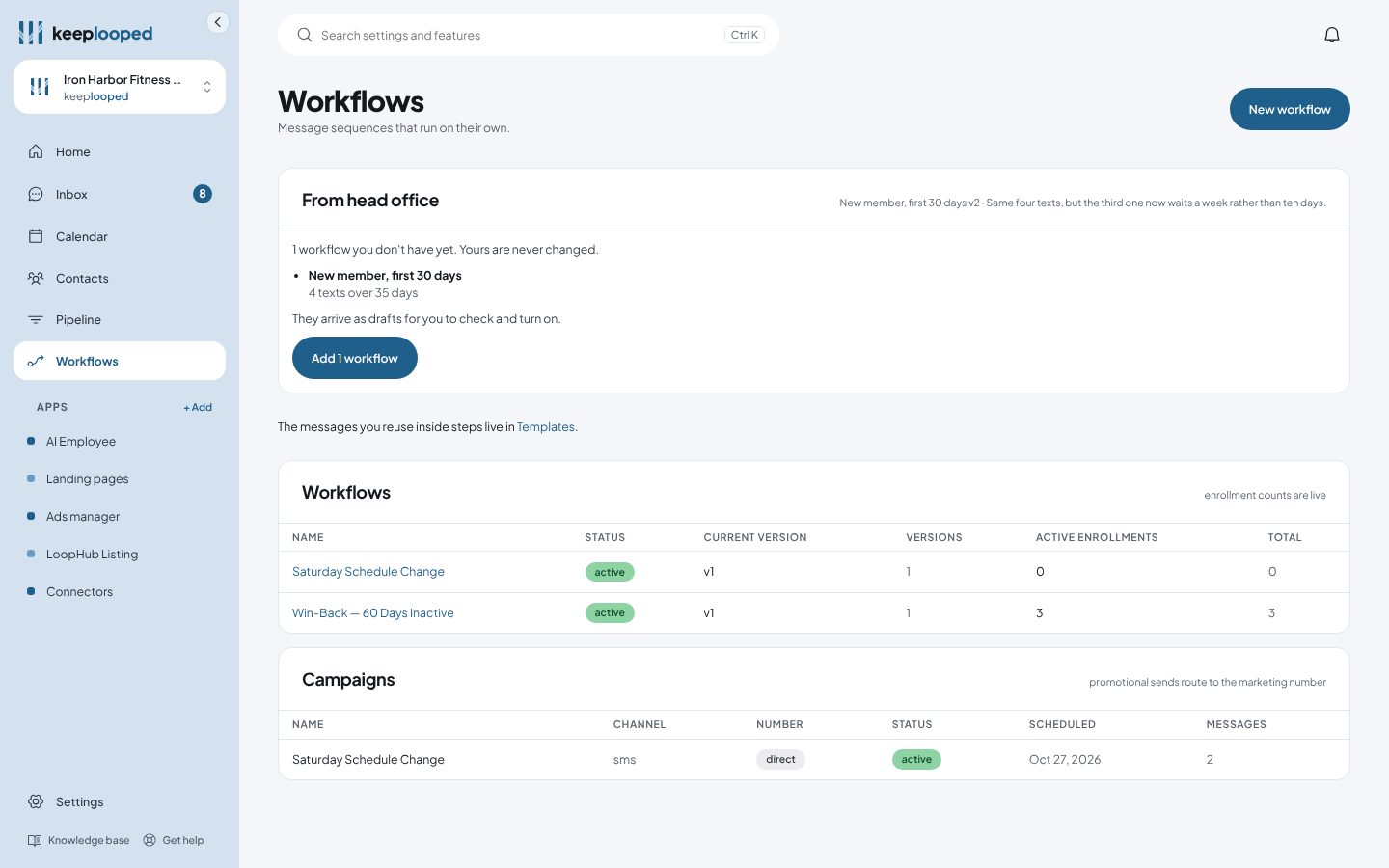
The front desk audit is the first step. Once you know exactly when and how often you're dropping inquiries, you can decide whether the fix is better scheduling, a backup line, or software that catches what a busy person physically can't. Most businesses need some combination of all three.
But none of it matters if you skip the audit. You can't fix a leak you haven't measured, and right now, most owners are guessing.